Friday, April 27, 2012

Why Xenoblade should not have been a Wii game


Executive summary: 
Because it's actually a good game. 

Longer version: 
I bought Xenoblade half a year ago on a whim when it came out in Europe, simply because I could. I had a vague recollection of having a Wii sitting somewhere under a huge pile of dust and apparently Xenoblade was only available for Wii. Fortunately it came with a proper controller included in the box which told me it wasn't going to be a lame wagglefest for kids and demented elderly like most other Wii games. 

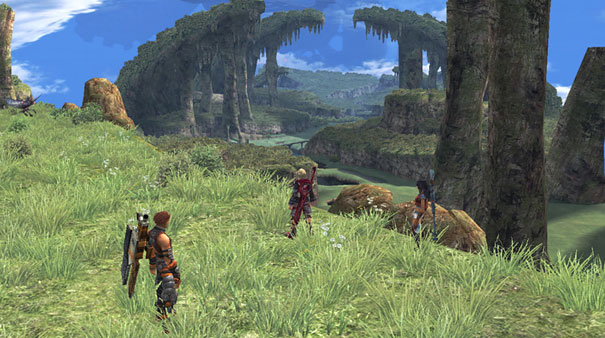
I have to give credits where they're due… Xenoblade is an awe inspiring experience. I'm no weeaboo and overly Japanese flavored games are usually not my thing, but Xenoblade made me a believer. You can tell how hard Monolith studio has had to work to make their immense creative vision a reality on the dismal hardware of the Wii. It's clear that object detail (polygons, texture quality, etc.) has been severely sacrificed to achieve the unbelievable draw depth of the game world. That must have hurt the talented artists big time.


This is truly a game that belongs, no: deserves a release on a HD console. From a distance things look OK, but if you look closer up, you immediately notice how much the bad Wii graphics damage the visual appeal of the game… Retina-cutting jaggies, low-polygon characters, muddy textures and unreadable texts in menus. It's almost worth crying over how much potential was lost when Nintendo hijacked Monolith Studios and forced them to work with the miserable waste of transistors we know as the Wii.

Skyrim shows us what Xenoblade could have been if the
Wii hadn't sucked so hard
To get a glimpse of what Xenoblade could have been one only has to look at Skyrim. While Xenoblade's world is much bigger than Skyrim's, it's also mostly filled with identical generic grass and shrubbery objects, only offering a memorable landmark once every few miles. Skyrim's world on the other hand is filled to the brim with interesting buildings and caves and ruins. While not the best looking game on HD consoles today, Skyrim does show what Xenoblade could have been if Nintendo hadn't decided to scam us all with last-gen hardware back in 2006.

Hardcore Wii-apologists still repeat the tired meme that graphics are not important and gameplay is everything, but it's not 1995 anymore. In 2012 there is simply no longer an excuse for subpar visuals, with so many awesome looking games out there that offer both graphics and gameplay... 

It's a pity then that Xenoblade is turning out to be the only game worth owning a Wii for. It's that good. But it's a shame you have to buy a grossly inferior console to experience a game that could have been so much better if only it had been on the PS3 or XBox 360. And this, my dear children, is why Nintendo should go software only and leave hardware design to the companies that know what they're doing.

Wednesday, April 18, 2012

Why an Apple game system would be bad news for Nintendo


The Apple rumor mill is always hyperactive, but one very persistent rumor is that Apple is going into the gaming business. Personally, I can't see them make a console any time soon, but gaming could very well be one of the cornerstones of the mythical Apple Television that everybody is expecting in the near future (or an extension of the existing AppleTV concept). After all, a large part of their iOS revenue stream comes from the thriving mobile games market, with literally millions of games being downloaded each day.

Apple could conquer the big screen if they put
their bright minds to it.
By moving further into the video game market Apple will be going head to head with Sony, Microsoft and Nintendo. Nintendo already feels the effect of mobile gaming on a daily basis. Their huge financial losses are for a large part the result of Apple stealing away the casual gaming crowds. 

Why buy a clunky Nintendo handheld when your mobile offers great games for a lot less and lets you play them on a powerful device you already carry with you all the time? Nintendo's success is mostly dependent on the fickle casual gaming crowds: people who don't know much about video gaming, parents buying familiar-looking games for their kids etc.


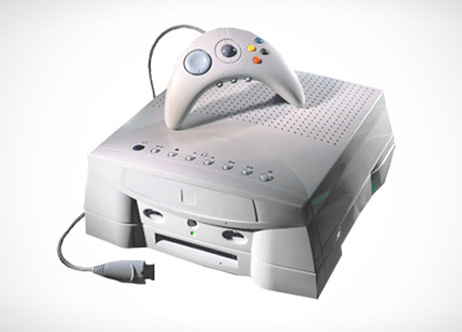
Apple tried it before with the Pippin,
but the world wasn't ready yet.

Of course, Nintendo still have a hard core of dedicated fans who will buy any game featuring plumbers, but compared to the masses of video gaming enthusiasts Sony and Microsoft attract with their more mature game series Nintendo's fanclub is shrinking quite steadily. The evidence is in the fact that Nintendo failed to sell any 3DS consoles prior to its draconian price cuts. If they hadn't slashed the price of the handheld, the handful of Nintendo Ambassadors wouldn't have had the critical mass to save the 3DS from certain doom.

At this moment, Apple are one of the few companies who truly understand what people want and need. If they manage to bring their excellent product experience to the gaming world it could spell trouble for the Wii U. Plenty of disappointed Nintendo gamers will be more than happy to move to Apple after the Wii failed to impress all but the youngest gamers and the blindest N-fanboys. Sony and Microsoft will survive thanks to their core gaming support, but Nintendo may eventually suffer or even be pressured by its investors to start making games for iOS. 

Ah well… Samus will probably look pretty sweet on a Retina display.

Friday, March 30, 2012

Sony and Microsoft: snuffing the used-games market?


How would you feel about not being able to buy (or sell) used games anymore? The question is not as hypothetical as you may think. There are some very persistent rumors doing the rounds about the successors to the PS3 and XBOX360 allegedly not being backwards compatible and making it impossible to play pre-owned games on it. 

Old bearded guys may soon become a rare
sight in game stores
The backwards compatibility thing is not as big a deal as many (mostly Americans) make it out to be. They probably forgot that the PS3, when launched in the EU and Australia was not backwards compatible either and hardly anyone cared at all. After all, the jump in visual fidelity between the PS2 and its HD successor was so enormous that it was hard to go back to the blurriness of old SD games once you had actually experienced the colossal difference (hence I pity people who only own a Wii and not one of the HD consoles - they're basically still playing obsolete last-gen games).

Preventing people to buy or sell used games is a different matter though. I prefer buying games new, because I know I am supporting the developers. However, on occasion I do sell games I don't play anymore and many people (especially young gamers on a budget) do make good use of the used-games market. This entire market may collapse if this rumor turns out to be true.

Video gaming analyst Michael Pachter
thinks gamers will not accept this
monkey business.
Video gaming authority Michael Pachter expects gamers to rebel against such practices. That may very well be the case, but right now there's already very little complaint about the various types of 'online passes', which are basically similar strategies.

In many ways this whole conundrum reminds me of the painful struggle the music industry went through when p2p music sharing started getting popular. Traditional business models are in need of a revamp to remain attractive to the gaming community. The PSP Go taught us that emphasizing digital distribution too strongly is a dangerous strategy. But there is a lot of merit in the model if game companies can hit the sweetspot.  In the end perhaps we can learn from the successes of Steam and the iTunes store. I'm convinced the magic formula for making digital downloads a compelling proposition are finding the right mix of attractive pricing and extreme convenience. 

If Sony can figure out how to bring us an exceptionally seamless and convenient PSN shopping (and storage!) experience paired with prices that match the best offers you typically find for physical media their new strategy may not turn out to be too bad for us. But please, Sony: no more funny business with proprietary storage.

Addendum:
A more interesting side-effect of the whole thing is that for this strategy to work, all three major console manufacturers have to go the same  route in order to not be at a disadvantage with one another. This will be a major issue for Nintendo who are still far behind in terms of digital distribution strategies compared to Sony and Microsoft. Will Nintendo be able to catch up and learn fast enough to survive this generation or will they finally go software-only after the Wii U?

Let's wait and see what Michael Pachter wil predict...

Wednesday, March 28, 2012

Asphalt Adrenaline versus Mars Bar - FIGHT!

The other day I spent a whopping €0.79 on Asphalt Adrenaline for my iPhone. It's the 6th installment in the cheap and cheerful arcady racing game series that has been released on several gaming platforms. It's a pretty cool little game. Graphically pretty good for a handheld racer, runs smoothly at a nice stable framerate, even though the scenery is pretty rich. Plenty of fun content for the same price as a candy-bar from the snack machine at work. And since the controls/handling are very arcady, it lends itself to being controlled with gyros, accelerometer and touchscreen controls so it's a pretty good fit for the iOS platform.


Now, what I find interesting is that this game is easily better than the Asphalt game that was launched alongside the 3DS. It's even better than the drab and blandly designed Need for Speed:The Run on the 3DS. Both of these games have an MSRP of €45, which makes them a whopping 5600% more expensive than the iOS game, which happens to have better production values and arguably is more fun to boot.

Gaming elitists like to dismiss iPhones and iPods as wannabe gaming devices that are just good for Angry Birds and overpriced flash games. Thanks to games like this one, Real Racing 2, Infinity Blade etc., I'm getting more and more convinced that iOS is starting to become a very compelling value proposition for certain genres of games. Notably games that lend themselves to control via a touch-screen and gyroscope. The graphics prowess of contemporary iOS devices is very impressive (a lot more powerful than the 3DS, and with a screen that has over 6 times more pixels) and it's hard to beat the value of games that cost less than a fiver.

If I get more than a few hours worth of entertainment out of an 80 cent game, that's mad value for money. Hate all you want on iOS gaming, but that's a hard to beat proposition right there.


The Nostalgia Machine - The laziness of Epic Mickey 3DS

When Resident Evil Revelations launched on the 3DS earlier this year, the handheld proved to be a device capable of delivering a solid current gen gaming experience when a developer really put its mind to it. It's a sad day then, when 3DS owners will not be getting the same treatment for Epic Mickey. This highly anticipated game about the classic lore of Disney will be coming to most platforms as an engaging 3D adventure - but not to the 3DS. First screens of the 3DS version of the game shockingly reveal a flat-as-a-pancake 2D platformer which looks like it belongs on the SNES or the Gameboy Advance.

In a desperate attempt at damage control, publisher Disney plays the cringeworthy nostalgia-card. By claiming the 3DS version of the game will be the spiritual sequel to Genesis classic "Castle of Illusions" they are hoping Nintendo fans will embrace the shameless downgrade as a special favor to them.

Castle of Illusions (Sega Genesis, 1990)
If there's anything Nintendo has taught us, it is that in order to make a contemporary sequel to an old 2D classic, you can bring the experience in 3D and still have the genuine nostalgic feeling. Just look at gems like Metroid Prime and Ocarina of Time. So it's safe to conclude that Disney's attempt at making us feel special is actually a thinly veiled excuse for incredible laziness. The same laziness that made the DS and the Wii such disappointing systems now seems to creep back into the 3DS as well (just when we thought we had survived the barrage of lazy cash-ins like Starfox 64 and Mario Kart 7).

The shocking part of this story is that word around the internet tells me that Nintendo fans are in fact accepting Disney's nostalgia-excuse and are already proclaiming the 3DS version of Epic Mickey the "best of the bunch". Of course, there will always be blind fanboys who will defend anything that comes to a Nintendo system, but even more rational system owners seem to be more accepting of this 2D disgrace than they ought to be. Seriously guys, bare-bones 2D games like this need to stay in a century long forgotten by the shrouds of time.

This is a plea to Nintendo fans all around the world: DEMAND MORE!

If we don't let devs and publishers know that we don't like to be treated as second rate gamers our systems will never be more than nostalgia-machines that do not live up to their full potential and we will forevermore be playing outdated SNES and N64 games.

Thursday, March 22, 2012

Musings about the Circle Pad Pro

As a lover of all things Nintendo, it pains me to say that the 3DS is in many ways a flawed product. It is as if the commercial success of the Wii and the DS made Nintendo less open to learning from the world around them. If they had been paying attention, they would have known that one thing holding back the success of the PSP as a "portable console experience" was the lack of a second analog nub.

Then, 6 years after the launch of the PSP, Nintendo go to market with the 3DS making the exact same mistake. However, 6 years later this problem has grown to colossal proportions in a gaming world where dual analog is a given for almost every conventional control scheme. Especially given the fact that the 3DS is built to give a 3D experience, and dual analog controls are the de-facto standard way to navigate three-dimensional worlds.

Not only is this a major handicap for gamers who love 3D shooters, platformers, sports games and adventure games, it's also a pain in the backside for 3rd party developers wanting to bring a multi-platforms game to the 3DS platform that relies on a dual-stick control scheme. And let's be honest, if there's anything Nintendo desperately needs it's solid 3rd party software support beyond the occasional obscure JRPG or fighting game.

As a workaround for the problem, Nintendo announced the Circle Pad Pro. It doesn't make the omission of a second circle pad on the 3DS any less unforgivable, but at least it allows in theory for significantly better controls on future games.

In reality though, it seems that the execution of the CPP has a lot of "room for improvement". After using the CPP for some time with Resident Evil Revelations and Metal Gear Solid:3D here are my biggest gripes with the design:

- It's too bulky for what it does. It's truly enormous. And it doesn't even feel ergonomically balanced - in spite of it looking all curvy and organically shaped.

- It covers the stylus. That's right... as if having a resistive screen instead of a capacitive touchscreen isn't bad enough, the CPP prevents you from getting out the stylus if you need it.

- It covers the wireless-switch. You can not switch WIFI on or off without removing the CPP

- It makes the volume slider difficult to reach

- It uses an extra battery (which also happens to be difficult to replace) and shortens the 3DS's battery-life even more by forcing it to communicate with the CPP via infra-red.

- It makes the 3DS extremely asymmetrical and emphasizes the smallness of the 3D screen - which is now placed completely off-center

- It decreases the portability of the 3DS significantly

That's a lot of compromises in the design, just to add a circle-pad that should have been in the 3DS from the start anyway. Surely even an average industrial design intern would have been able to spot the problems with this execution and do a better job at designing it in the first place. This makes me wonder how long it will be before Nintendo announces an improved redesign of the 3DS...

Time for a 3DS Lite perhaps?


Wednesday, March 21, 2012

Nintendo's Gaming Prosthetics


It is no secret that accessories are a major goldmine for any company in the electronics and entertainment business. In a market where most hardware and software is increasingly commoditized, very healthy profit margins are found on things like protective cases, docks, chargers and other things that are typical add-ons to today's electronic ecosystems.

Nintendo has always been a frontrunner in this trend. Oldschool gamers will certainly remember R.O.B, the lightgun, the powerglove and other Nintendo accessories that were supposed to enhance the gaming experience of the early consoles of the 8-bit and 16-bit era.

But certainly the worst offender in this regard must be the Wii. Thousands of white plastic strap-on accessories have been produced for gamers to attach to their Wiimotes in order to make motion gaming seem less like uncontrolled stick waggling and more like a genuine sword fight (or a gunfight, or an exciting fishing trip, etc.). Many of these accessories came from Nintendo themselves.

Obviously, the only proper must-have accessory for the Wii is the Classic Controller - which makes controlling some Wii games quite a bit more bearable. But I digress...

There's nothing particularly wrong with this business model. But you know that something is fishy when accessories are used to 'fix' obvious design flaws. I'm referring to the Circle Pad Pro, of course. Even before the 3DS was launched, most gamers noticed the glaring omission of a second analog control on the handheld. What was Nintendo thinking? Had they completely ignored anything they could have learned from the PSP? As great as the PSP was, many gamers agreed that having only a single analog nub was a huge handicap in a world where every relevant gaming genre depends heavily on dual-stick controls.

Of course, the DS got away with it because it was too underpowered to provide a proper 3D gaming experience. But the 3DS is supposedly designed around the experience of 3D environments.

Certainly Nintendo could not be so foolish to omit the controls needed to navigate the typical 3D world? In fact they were... And they admitted as much by making the CPP. A horrendously ill-thought-through accessory to make up for the lack of a second stick on the 3DS.

The Icarus Claw


I will discuss the flaws of the CPP in another article. So let's move on to Kid Icarus where things get really painful. Literally. For those who haven't played the game or the demo yet: Kid Icarus is a 3DS game that suffers from a rather bad control scheme. This has been known for a while, and most people assumed that Nintendo would be on top of this and fix it in time for release - or use the CPP to provide a working alternative to the standard controls (which are in fact unusable for left-handed people and give right-handed people painful hand cramps, hence the "Icarus Claw").

Nintendo's solution, however, was to give gamers a plastic stand. Yes, you read that right. They actually produced a piece of plastic that lets people fumble with the 3DS while sitting at a desk or a table instead of doing the easy and logical thing: fix the software.


What I would like to understand is: what goes on in the minds of people managing these projects? Why would a respected company like Nintendo let a game with a game-breaking control scheme go to market and set up a production-line in a factory to produce a plastic accessory as a workaround for the problem?

If you happen to be a Nintendo shareholder, please make sure to question the decision-making process over at Nintendo HQ at the next shareholder meeting!